
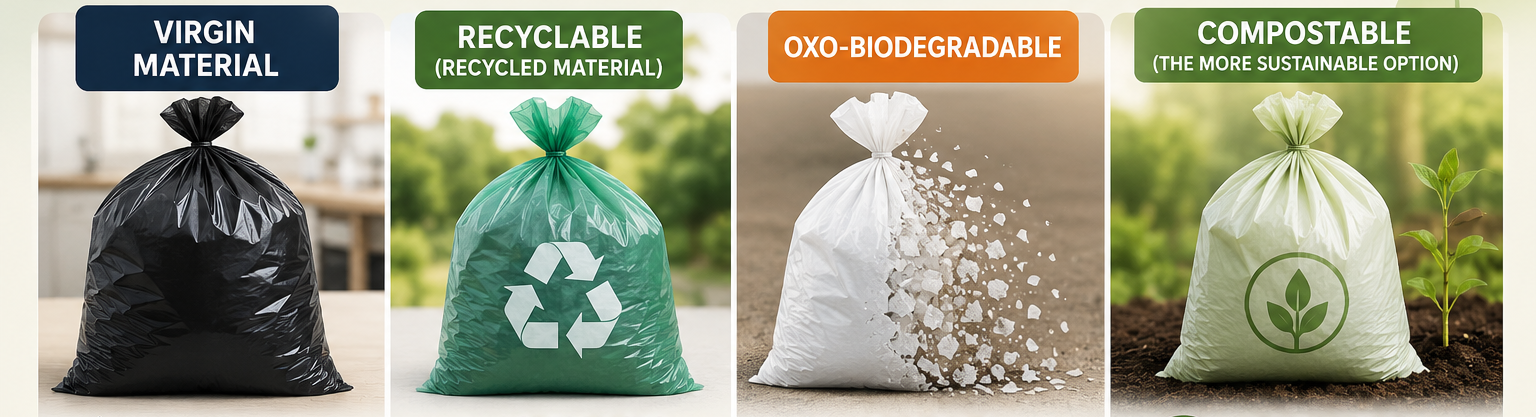
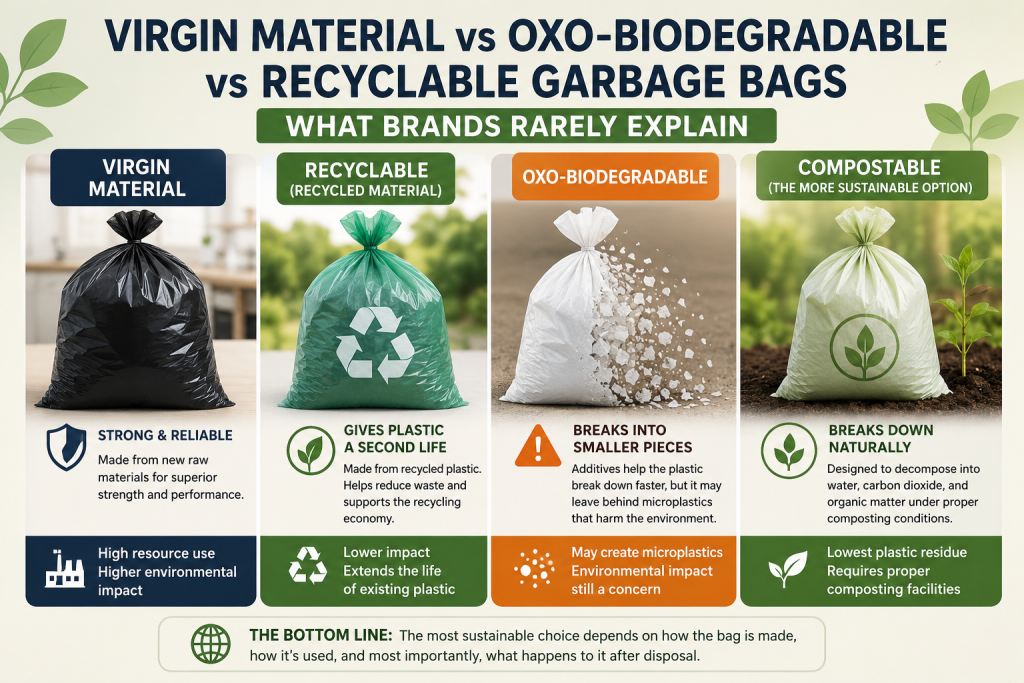
Virgin Material vs Oxo-Biodegradable vs Recyclable Garbage Bags: What Brands Rarely Explain
Understanding these differences can help consumers make better choices.
Virgin Material: Strong and Reliable
Virgin material refers to plastic made entirely from new raw materials. Since it has not been recycled or reused, the quality is more consistent.
Virgin material garbage bags typically offer:
• Better strength and puncture resistance
• More consistent quality
• Better sealing performance
This makes them suitable for applications that require durability and reliability. Mr.Smart garbage bags are examples of how virgin materials can provide dependable performance for daily waste disposal.
However, virgin plastic requires new resources to produce, resulting in a larger environmental footprint compared to recycled materials.
Recyclable Garbage Bags: Extending the Life of Plastic
Recycled garbage bags are made from plastic that has been collected and processed into new products.
Their benefits include:
• Reducing plastic waste
• Lowering the demand for new raw materials
• Supporting the recycling economy
Many modern recycled bags still provide sufficient strength for daily use. Eagle garbage bags show how recycled materials can be given a second life while remaining practical and reliable.
Oxo-Biodegradable Bags: The Hidden Concern
Oxo-biodegradable bags contain additives that help the plastic break down when exposed to oxygen, heat, and sunlight.
While this may sound environmentally friendly, the process works differently from natural decomposition.
Instead of fully disappearing, the plastic often breaks into smaller fragments. These fragments may become microplastics that remain in the environment for a long time.
Because of these concerns, several environmental organizations and countries have questioned the long-term benefits of oxo-biodegradable plastics.
What About Compostable Bags?
Compostable bags are designed to break down into water, carbon dioxide, and organic matter under proper composting conditions.
Unlike oxo-biodegradable plastics, certified compostable materials are intended to leave no conventional plastic residue behind.
However, they require suitable composting facilities to achieve proper decomposition. If disposed of in regular landfills, they may not break down as intended.
Not all “green” claims mean the same thing.
Virgin materials offer excellent performance. Recycled materials help reduce the use of new plastic. Oxo-biodegradable plastics remain controversial because they may contribute to microplastic pollution. Compostable materials offer promising environmental benefits when proper disposal systems are available.
The most important question is not what the bag is made from, but what happens to it after it is thrown away.
Understanding the difference allows consumers and businesses to make more informed choices about sustainability.